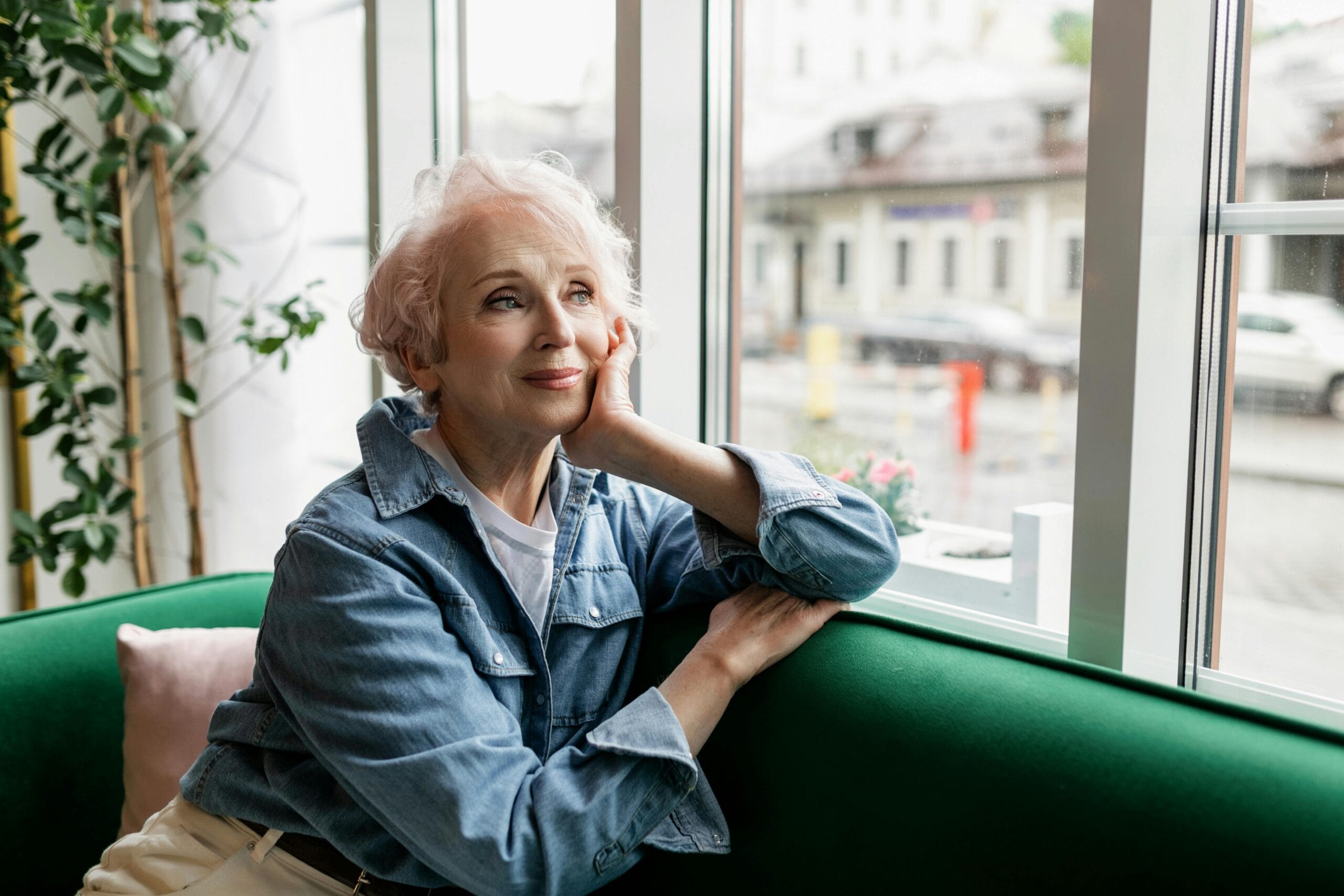
There are questions one only asks when the question itself already requires a little courage: Am I allowed to again? Anyone who has lost a long-term life partner knows this quiet, almost shy thought. It doesn’t come loudly, not suddenly, but rather like a light that slowly brightens. This article is precisely about this: Dating after the death of a partner, not as a mandatory program, not as an end to grief, but as a mindful, honest look at a phase of life that many in the 50+ generation eventually reach.
A Very Common, Very Quiet Life Situation
In Switzerland, approximately 405,000 widowed individuals live, about 80 percent of whom are women. Nevertheless, widowhood often remains a quiet life situation in society: many affected individuals tend to carry their grief, their loneliness, and later also their desire for new closeness, rather privately. Widows and widowers do not quite “fit” into a world that often wants to appear dynamic, active, and positive, as Swiss author Cornelia Kazis states in her book “Living On, Moving On, Loving On”. Those who consider dating in this situation often feel additionally scrutinized, and sometimes they are.
The most important thing first: There is no single, “right” time. Grief is individual, not linear, not by the book. The question “When am I allowed to?” cannot be answered with a date – but with inner awareness.
What Research Says About Grief and New Beginnings
The previously popular “stages of grief” by Elisabeth Kübler-Ross are now considered outdated. Currently influential is the Dual Process Model by psychologists Margaret Stroebe and Henk Schut (Utrecht University, first published in 1999, updated in 2010). Simply put: grief does not mean either only looking back or simply moving on. Many people oscillate between both; the model describes this movement between two poles:
- Loss-oriented: Remembering, feeling, allowing longing, nurturing the bond with the deceased.
- Restoration-oriented: Reorganizing daily life, building new roles, tasks, and relationships.
Both are allowed to exist, even on the same day. Those who sometimes laugh, enjoy a walk, or consider an online profile do not “betray” their deceased partner. This oscillation between past and future is, according to current research, normal and even healthy.
Additionally, American grief researcher Robert Neimeyer coined the concept of Continuing Bonds: a new love does not replace the deceased person; it stands alongside them. Inner connection may remain, even as new life begins externally.
Inner Signals: Signs That a New Encounter Is Becoming Possible
Instead of a calendar date, an honest look inward is worthwhile. US psychologist Marilyn A. Mendoza, specializing in grief, mentions the following indicators in Psychology Today, summarized in essence and supplemented for the Swiss reality:
- The intensity changes. The pain isn’t gone, but it comes less often in overwhelming waves. Between the lows, there are longer calm periods.
- You can share stories without breaking down. Talking about the deceased eventually feels more like love than pain.
- Everyday joy returns. A walk by the lake, a concert, a good meal – suddenly there is enjoyment again, without immediate guilt.
- The desire for closeness emerges – quietly, but perceptibly. Closeness doesn’t necessarily mean “new marriage”. But also: being able to share your day with someone. A hand to hold. A conversation as equals.
- You become aware of your own needs again. The body also signals again: with hunger, fatigue, a desire for movement, or the wish for an encounter.
- The thought of a date evokes curiosity rather than panic. Perhaps still with butterflies, but no longer with a heavy heart.
Important: These signals are not a checklist that must be “ticked off.” It is enough if several of them feel more like more of you and less like a mask you put on.
Feelings of Guilt, the Most Common Inner Stumbling Block
Hardly anyone starts without them: feelings of guilt. “I’m betraying him.” – “What would she say?” – “Am I even acceptable?”
Psychologist Dr. Doris Wolf recommends a gentle internal shift in perspective: What would my deceased partner wish for me if they could see me today? Most people, when answering honestly, come to the same conclusion: anyone who truly loved a person would not want them to be left alone and joyless.
It can also be helpful to realize: a new love does not compare. It is different. A second love is not a repetition, but a chapter of its own.
Family, Friends, Environment: The Social Dimension
A new partner changes not only you, but also the system around you. Adult children, siblings, long-standing circles of friends, sometimes in-laws: they all have also lost something with the deceased person and react differently.
Some children are relieved: “It’s nice that Mom is laughing again.” Others initially react reservedly or even rejectively. Concerns about inheritance, fear of “losing” the remaining parent “again,” or the feeling that the deceased is being “replaced” often play a role. The circle of friends can also feel alienated – simply because consistency is reassuring and change is unsettling.
What helps:
- Give children and closest people time, without letting them dictate your own pace.
- Communicate honestly: “He/She is not replacing Dad/Mom. He/She is a new person in my life.”
- Do not force the new partner into all family rituals too early. Step by step builds trust.
Practical Tips for the First Cautious Steps
Even if you feel an inner ‘yes,’ you don’t necessarily have to become active on a platform right away. A calm sequence is helpful:
- Stabilize your daily routine. Sleep, exercise, social contacts – the foundation should be reasonably stable before new emotional movement is added.
- Update your self-image. Who are you today, without your deceased partner? What makes you feel good? What do you no longer want?
- Start small. A coffee with a new acquaintance. A club or lecture evening. A weekend away with a female friend. Practicing encounters without them having to be a “date”.
- Keep expectations low. Not every first contact leads to a relationship. That’s not a defeat, but a reality of life – even after 50.
- Act out of zest for life, not loneliness. If every evening alone is barely bearable, it is wiser to address the loneliness first (friendships, hobbies, possibly grief counseling) rather than immediately seeking a partner.
- Seek support if needed. Grief counseling, a parish office, a family doctor, or a psychotherapist are not a sign of “weakness”, but a wise investment. If pain, sleep disturbances, or a feeling of paralysis barely subside for years, it may be advisable to seek professional support. In some cases, specialists also speak of a prolonged grief disorder, which can be well supported and treated.
- Get used to today’s forms of getting to know people. Much today works through platforms, profiles, and chats. This is different from 20 or 30 years ago – but it’s learnable.
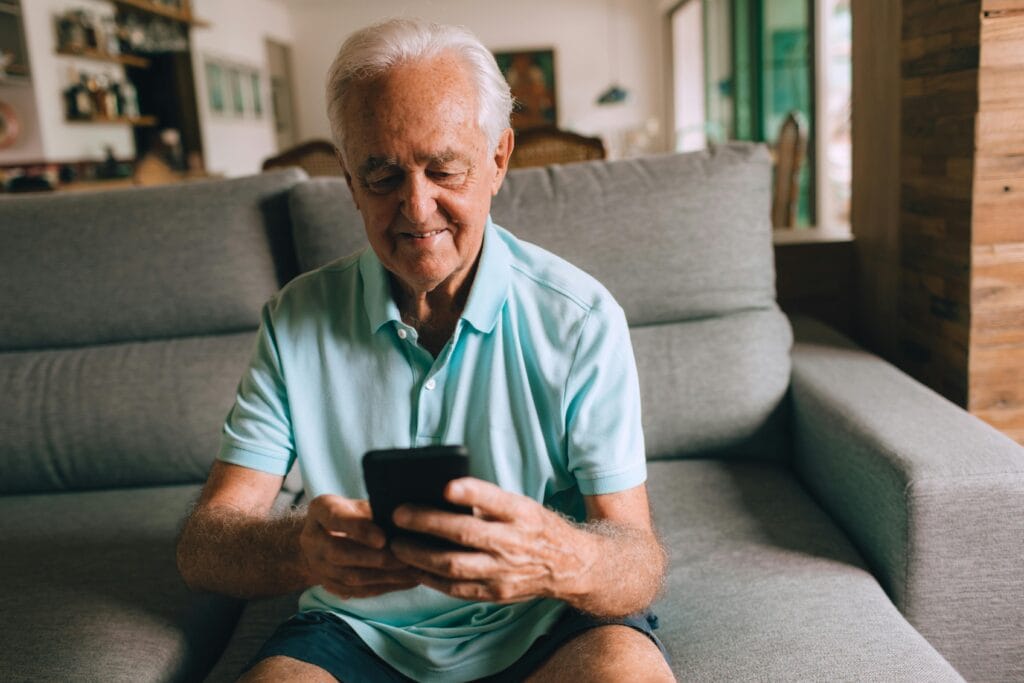
Online Dating After Widowhood: What You Should Pay Attention To
Online dating can be a particularly good option for widowed individuals: calmly, from the sofa, without immediately having to go into a classic dating situation. At the same time, the civil status “widowed” brings its own dynamic, as experience reports (e.g., from the Nicolaidis YoungWings Foundation) show: some counterparts simply don’t know how to deal with it, others react over-caringly, while still others are bothered that “widowed” is different from “divorced.”
A few proven tips:
- Be honest in your profile, but not blatant. “I am widowed” does not belong in the headline, but can find its place in the body text or in the first honest conversation.
- Don’t explain everything in the first chat. You are more than your loss. Profession, hobbies, values, humor – all of this deserves to be seen first.
- Comparing is human – and a stumbling block. Nobody is “the new Hans”. Give the new person their own stage.
- Pay attention to security. Especially after a loss, one is emotionally more vulnerable. Choose a reputable platform, look for transparent memberships, verified profiles, and a protected chat.
This is precisely where DuoLivo comes in: a Swiss platform specifically for singles aged 50 and over, with clear memberships, no subscription traps, verified profiles, and a chat that requires mutual interest first. No swipe stress. No “more coins, more messages.” Instead, space for honest conversations – even about what was.
How DuoLivo Supports You in This Phase of Life
Those who wish to take first steps again after the death of a partner do not need a loud new beginning. Often, a protected space is enough, where one can calmly read a profile, carefully write a message, and decide for oneself how quickly a conversation becomes more personal.
This is exactly how DuoLivo is designed, developed in Basel, aimed at people aged 50 and over who are looking for more than the next match. You set the pace. You decide when and if you want to talk about what was. And you do so within a framework that offers a reliable foundation with data protection according to high Swiss and European standards, transparent community rules, and verified profiles.
Thus, a second love may grow if it wants to, and a good friendship may develop if that is right at the moment.
When Is the Right Time?
The right time is not a date, but a state. It is reached when the thought of an encounter feels more like zest for life than flight. When you can talk about your deceased partner without breaking down. When you are allowed to be yourself again, with all your history, all your love, all your grief, and yet also with all your curiosity for what may still come.
No one has to rush. No one has to wait until it seems “appropriate.” And no one betrays a loved one by allowing themselves to love again.
👉 If you feel it’s time for cautious new steps, start on DuoLivo – the reputable Swiss dating site for singles aged 50 and over. At your own pace, with real people, without subscription traps.
FAQ – Frequently Asked Questions About Dating After Widowhood
There is no mandatory deadline. Some feel ready after a year, others after five. Both are fine. Inner stability is more important than duration.
Yes, honestly – but not as a headline. It is appropriate in the body text or in a personal conversation. This avoids misunderstandings without your loss becoming your entire identity.
Listen, take their concerns seriously, but do not let them dictate your pace. A new partner replaces no one – that can be said.
No. Current grief research shows: a continued inner connection (continuing bonds) and a new love are not mutually exclusive.
If intense grief, paralysis, or hopelessness hardly subside for a very long time, a conversation with a family doctor, psychotherapist, or grief counselor is worthwhile. This is not a sign of weakness, but of self-care.